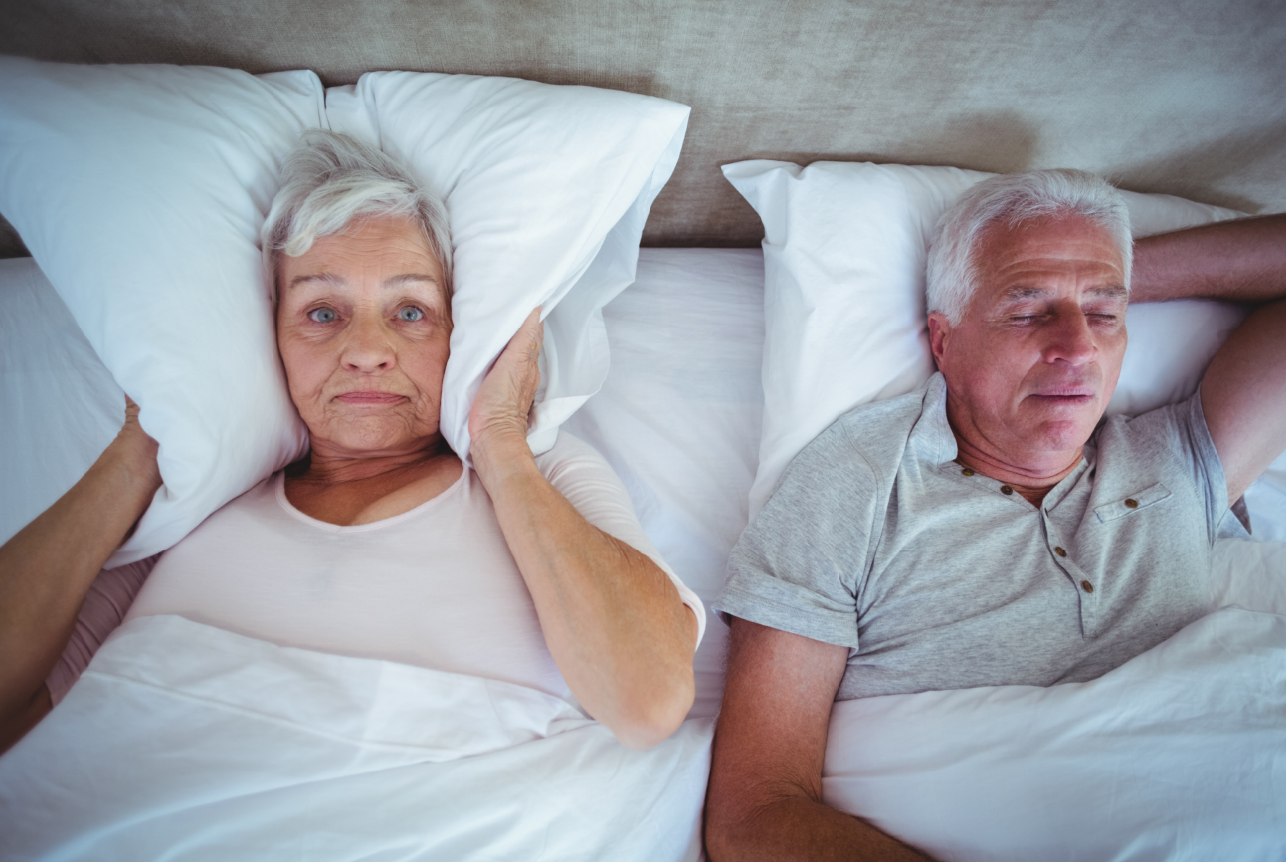
Getting good sleep affects far more than how rested you feel the next morning. Sleep supports cardiovascular and brain health, and a growing body of research has linked several types of sleep problems with a higher risk of stroke.[1] The American Heart Association reviewed the evidence in a 2024 scientific statement on sleep and brain health. Its conclusion was that accumulating evidence connects sleep disorders and disturbed sleep with stroke, changes in the small blood vessels of the brain, and cognitive problems.[1] The American Heart Association and American Stroke Association also included better sleep among the healthy lifestyle measures highlighted in their 2024 guideline for preventing a first stroke.[2]
What Does the Research Show?
Different sleep problems have different levels of evidence behind them.
Obstructive sleep apnea has the strongest connection. Sleep apnea repeatedly causes breathing to stop or become restricted during sleep. Research has associated moderate to severe obstructive sleep apnea with increased stroke risk.[1] Sleep apnea is also very common among people who have already experienced a stroke.
Too little or too much sleep may be a warning sign. A meta-analysis of prospective studies found that both short and long sleep duration were associated with greater stroke incidence and stroke mortality. The association was stronger for unusually long sleep.[3] Long sleep may sometimes reflect underlying illness, so these studies do not prove that sleeping longer directly causes strokes.
Insomnia deserves attention. A 2026 systematic review involving data from millions of participants found an association between diagnosed insomnia and stroke risk. Individual insomnia symptoms produced less consistent results, although an association with ischemic stroke was detected.[4]
Excessive daytime sleepiness has also been associated with stroke. A meta-analysis following more than 150,000 people found that excessive daytime sleepiness was associated with a higher risk of stroke.[5] Daytime sleepiness can also be a symptom of another problem, including sleep apnea.
Sleep matters after a stroke, too. A 2023 systematic review found that obstructive sleep apnea and its severity were associated with recurrent cardiovascular or cerebrovascular events and mortality after stroke. Poor sleep quality, insomnia and long sleep duration also showed concerning associations, although fewer studies were available for those problems.[6]
Researchers are still working out how much treating individual sleep disorders can reduce future stroke risk. For example, continuous positive airway pressure (CPAP) clearly treats obstructive sleep apnea, and studies suggest possible benefits after stroke, but evidence that CPAP prevents recurrent cardiovascular or cerebrovascular events remains mixed.[1,6]
One More Reason to Take Sleep Problems Seriously
Nearly everyone has an occasional bad night. Stress, changing schedules, too much evening stimulation and other lifestyle factors can interfere with sleep temporarily. Persistent insomnia, loud snoring accompanied by pauses in breathing, waking up gasping, excessive daytime sleepiness, or other ongoing sleep disturbances deserve more attention.
Stroke risk provides one more reason to take sleep problems seriously and seek treatment when they cannot be readily overcome with lifestyle adjustments. A healthcare professional can help determine whether an underlying sleep disorder, medication, medical condition or another factor needs to be addressed. Sleep is an important part of overall health. The growing connection between sleep and stroke risk is one good example of why protecting those hours at night deserves attention during the day.
REFERENCES
Gottesman RF, Lutsey PL, Benveniste H, et al. Impact of sleep disorders and disturbed sleep on brain health: a scientific statement from the American Heart Association. Stroke. 2024;55:e61-e76. doi:10.1161/STR.0000000000000453.
Bushnell C, Kernan WN, Sharrief AZ, et al. 2024 guideline for the primary prevention of stroke: a guideline from the American Heart Association/American Stroke Association. Stroke. 2024;55(12):e344-e424. doi:10.1161/STR.0000000000000475.
Wang H, Sun J, Sun M, Liu N, Wang M. Relationship of sleep duration with the risk of stroke incidence and stroke mortality: an updated systematic review and dose-response meta-analysis of prospective cohort studies. Sleep Med. 2022;90:267-278. doi:10.1016/j.sleep.2021.11.001.
Cabanillas-Lazo M, Pascual-Guevara M, Tapia-Sequeiros G, Sifuentes-Montalvo AV. Insomnia and stroke risk: a systematic review with meta-analysis of analytical observational studies and Mendelian randomization studies. Sleep Med X. 2026;11:100177. doi:10.1016/j.sleepx.2026.100177.
Wang L, Liu Q, Heizhati M, Yao X, Luo Q, Li N. Association between excessive daytime sleepiness and risk of cardiovascular disease and all-cause mortality: a systematic review and meta-analysis of longitudinal cohort studies. J Am Med Dir Assoc. 2020;21(12):1979-1985. doi:10.1016/j.jamda.2020.05.023.
Hale E, Gottlieb E, Usseglio J, Shechter A. Post-stroke sleep disturbance and recurrent cardiovascular and cerebrovascular events: a systematic review and meta-analysis. Sleep Med. 2023;104:29-41. doi:10.1016/j.sleep.2023.02.019.